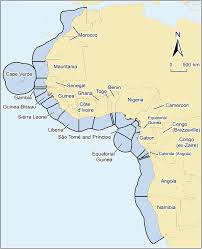
From Desert to Coast: How Sahel Instability is Shaping Maritime Risk in the Gulf of Guinea
1. Situation
Security dynamics in the Sahel — particularly in Mali, Burkina Faso, and Niger — continue to deteriorate, with armed groups expanding their operational reach and systematically exploiting weak governance structures across the region.
Concurrently, the Gulf of Guinea remains a critical maritime corridor for global energy flows and commercial shipping. While recorded piracy incidents have fluctuated in recent periods, the underlying structural conditions driving maritime insecurity persist and, in several respects, are intensifying.
2. Pattern
A key emerging pattern is the southward spillover of Sahelian instability into coastal and littoral zones. This manifests across three observable trends:
- Expansion of trafficking networks originating in the Sahel and extending toward coastal access points
- Increasing use of littoral zones for the illicit movement of fuel, arms, and narcotics
- Persistent governance deficits in coastal regions that continue to enable maritime criminal activity
It is important to note that a temporary reduction in direct piracy incidents does not indicate a reduction in underlying risk. The enabling environment for maritime insecurity is deepening irrespective of short-term incident fluctuations.
3. Drivers
Three structural drivers account for this shift:
Fragmented State Control The deterioration of governance across Sahelian states has severely weakened border control systems, creating exploitable corridors through which illicit networks can expand toward coastal access points with limited interdiction risk.
Trafficking Convergence Armed groups and organised criminal networks operating across the Sahel are increasingly reliant on diversified revenue streams. Maritime-linked smuggling routes have become an integral component of these financial architectures, deepening the operational linkage between inland instability and coastal criminal activity.
Economic Pressures Structural economic vulnerabilities in coastal communities create conditions amenable to recruitment into illicit maritime activities. Where licit economic opportunity is absent, illicit networks fill the void — drawing on a persistent and renewable labour supply.
4. Implications
The convergence of these drivers carries direct implications across several risk domains:
- Shipping Risk: Vessels operating in or transiting poorly governed coastal zones face increased exposure to opportunistic attacks and cargo theft.
- Energy Security: Offshore oil and gas operations in the Gulf of Guinea face elevated disruption risk as instability migrates toward littoral areas.
- Insurance and Liability: Sustained risk perception in the region continues to support elevated marine insurance premiums, increasing the cost of commercial operations.
- Regional Stability: Maritime insecurity does not exist in isolation — it reinforces, and is reinforced by, broader governance failures across the subregion.
5. Outlook
Maritime risk in the Gulf of Guinea is assessed as likely to remain structurally persistent rather than episodic in character. A temporary reduction in piracy incidents should not be interpreted as a resolution of underlying conditions.
The structural drivers — entrenched trafficking networks, fragmented governance, and sustained regional instability — indicate the following trajectory:
- Continued and potentially deepening vulnerability in coastal and offshore waters
- Reconfiguration of maritime threat typologies rather than their disappearance
- Growing analytical and operational necessity for integrated land-sea security frameworks
6. Bottom Line
The Gulf of Guinea cannot be assessed in isolation from its continental context. Maritime risk in this region is increasingly a downstream consequence of Sahel instability. Any rigorous risk assessment must therefore integrate analysis across both domains — treating land and sea not as separate theatres, but as interconnected dimensions of a single security environment.
AfriSahel Risk Intel | www.afrisahel.com